
We enter this world helpless, vulnerable, and dependent. Most of us will also end life in a state of vulnerability and dependence. And between the beginning and the end, we will all experience periods, long or short, when we’ll desperately need the help of others.
Some of us go from a healthy high school athlete to suddenly living with the immense challenges of long-Covid. Some of us will need a wheelchair for a few days after hip surgery, and some of us will need to use a wheelchair for the rest of our life after a car crash. Some of us find our fierce independence sharply interrupted by a depression so deep that we can’t buy our own groceries or clean our own house. We rely on our loved ones to buoy us through the stormy seas.
I remember, as a young girl, peering through the hospital glass at my premature baby brother. He was attached to countless wires and tubes, and was fighting for his life. Miraculously, he survived. God’s grace worked through the caring hands of countless doctors and nurses, to save this unbelievably tiny person.

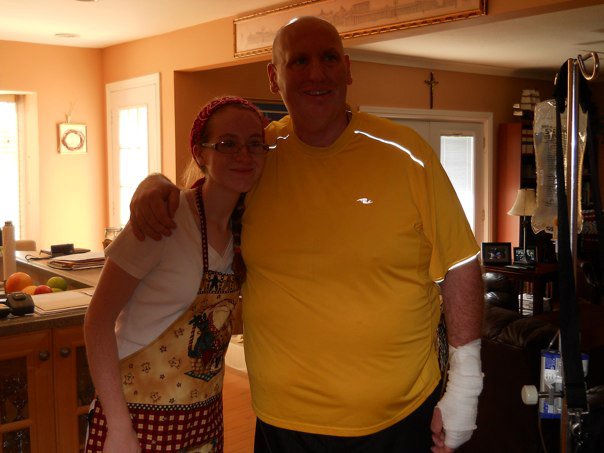
As a teenager, my summers were usually spent swimming and playing soccer. But at age 16, I spent most of my summer beside my dying Dad. After his diagnosis of pancreatic cancer, we thought we’d have 6 months with him. Instead, we had 6 weeks. My powerhouse of a father, who literally helped write the book on getting things done, became weaker and weaker. But love’s strength doesn’t rely on physical strength, and he poured out his love to us and to all his community. In his last moments, all we could do was hold his hand and silently bestow our love on him.

Interdependence is a fundamental aspect of the human condition. A loss of autonomy–whether temporary or permanent–does not mean a loss of dignity, and it is grossly ableist to suggest the opposite. When we demonize dependency, we demonize our very humanity.
Let us bless the vulnerability and poverty in the face of the Other. We can start by looking in the mirror.
 Maria McCann