-
“Lives Lived For Life” Magazine
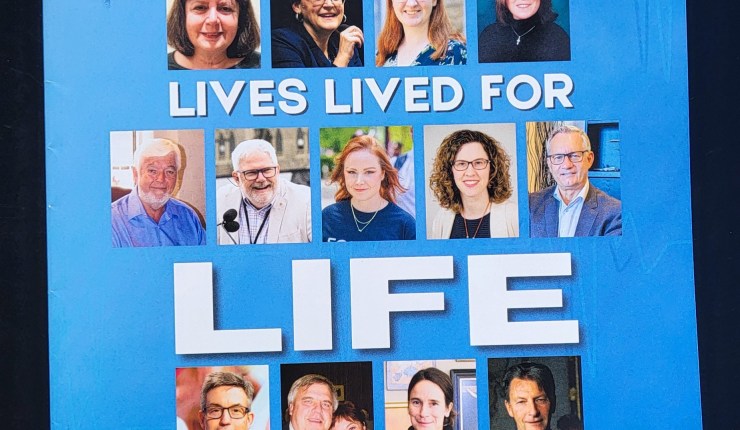
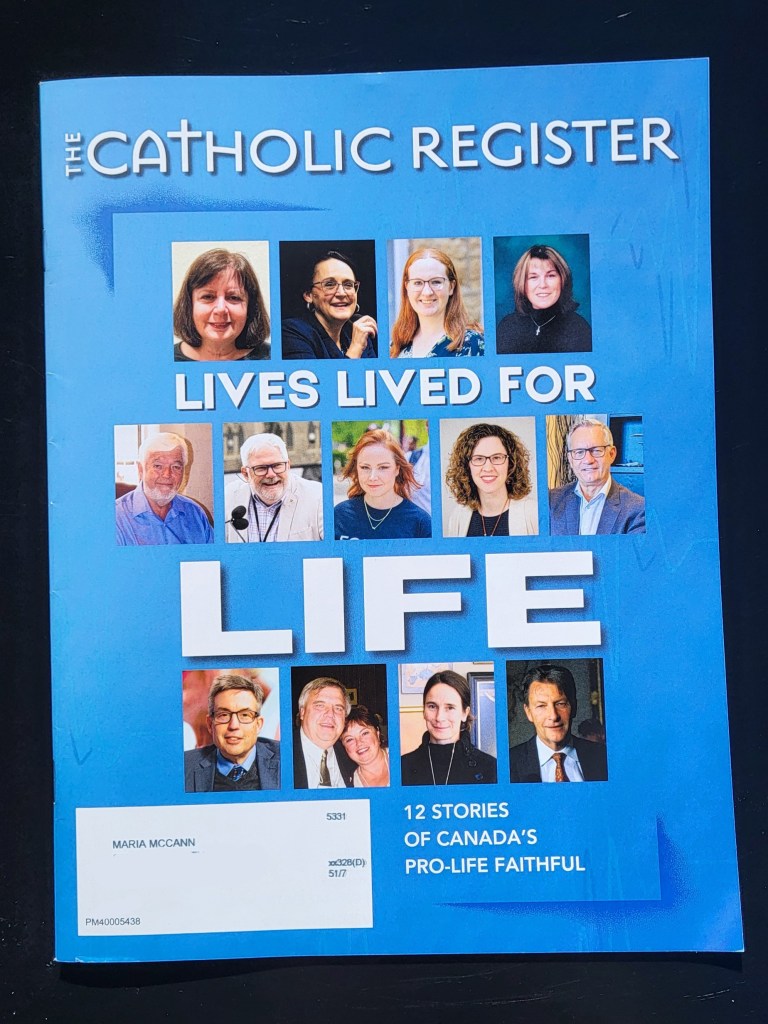
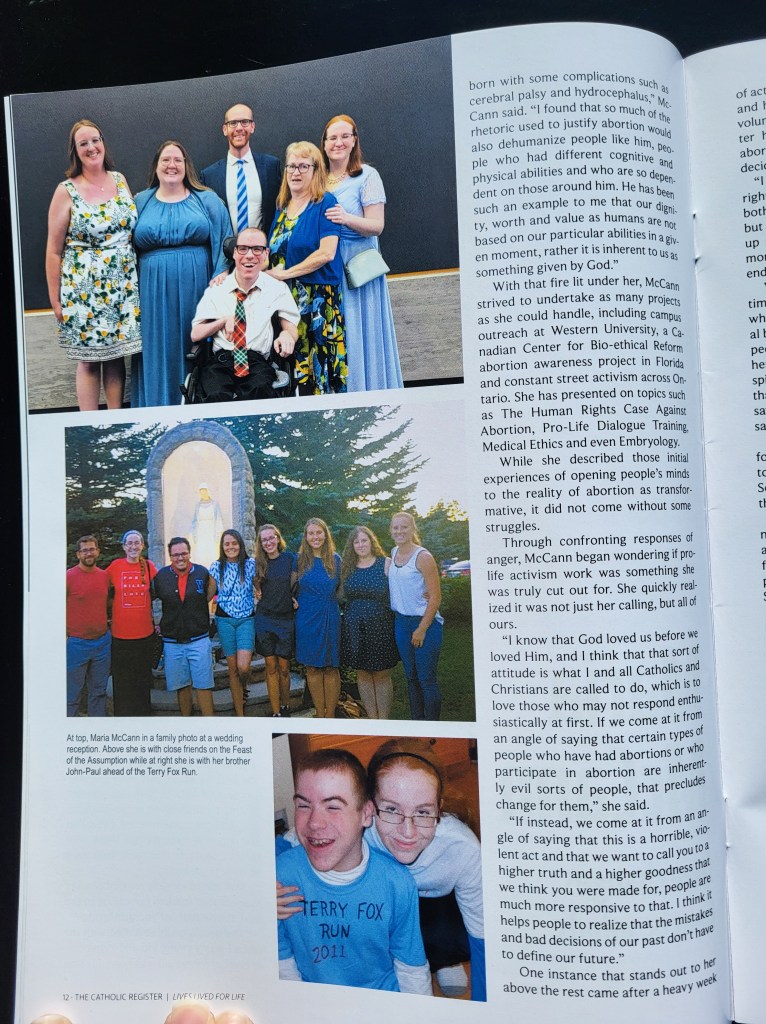
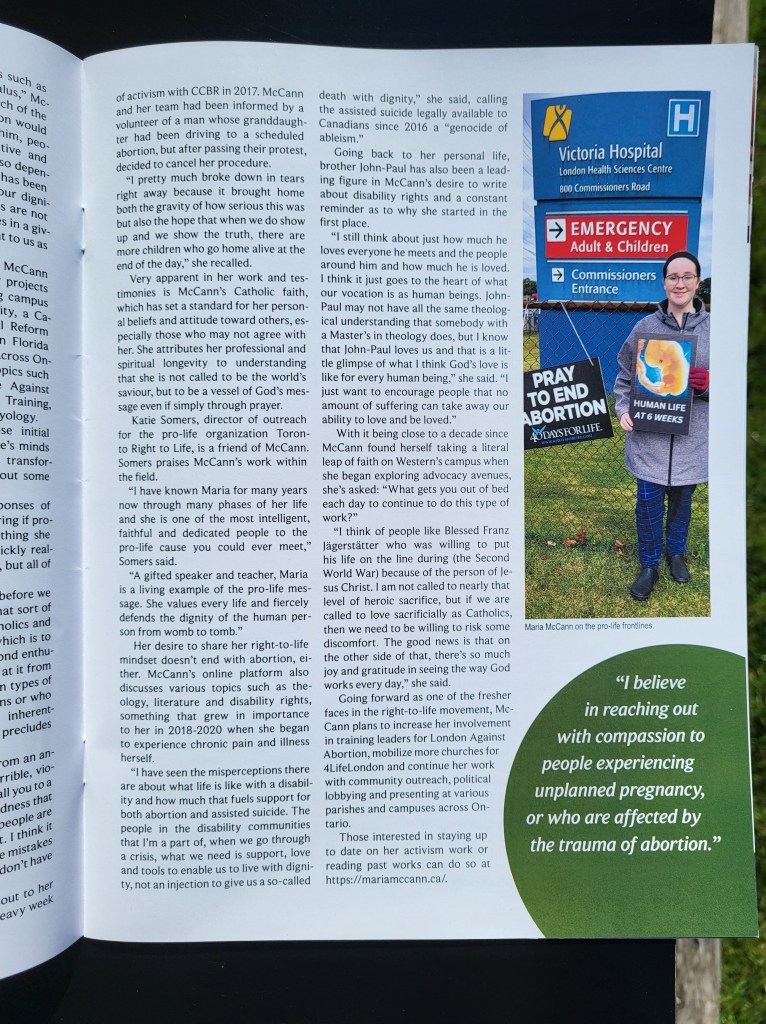
Earlier this year, I was interviewed by the Catholic Register about my involvement in the pro-life movement. I was overwhelmed and humbled to be included in their “Lives Lived For Life” issue, a special edition which highlighted 12 stories of pro-life Canadians.
My prayer is that anyone who reads the issue realizes that every one of us has a role to play in ending abortion. The pro-life movement is not about me or about you. It’s about our pre-born neighbours, little girls and boys, whom God calls us to protect from slaughter.
Get Involved: EndTheKilling.ca/TakeAction
I’m so grateful for the support of my family in doing this work, and for the countless pro-life colleagues who’ve become a second family.
Soli Deo honor et gloria!

-
Pro-life Outreach Stories: Summer 2026
Show, Don’t Tell
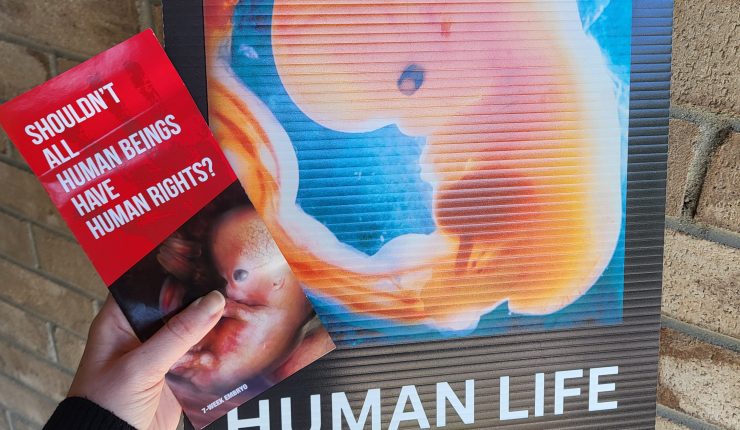
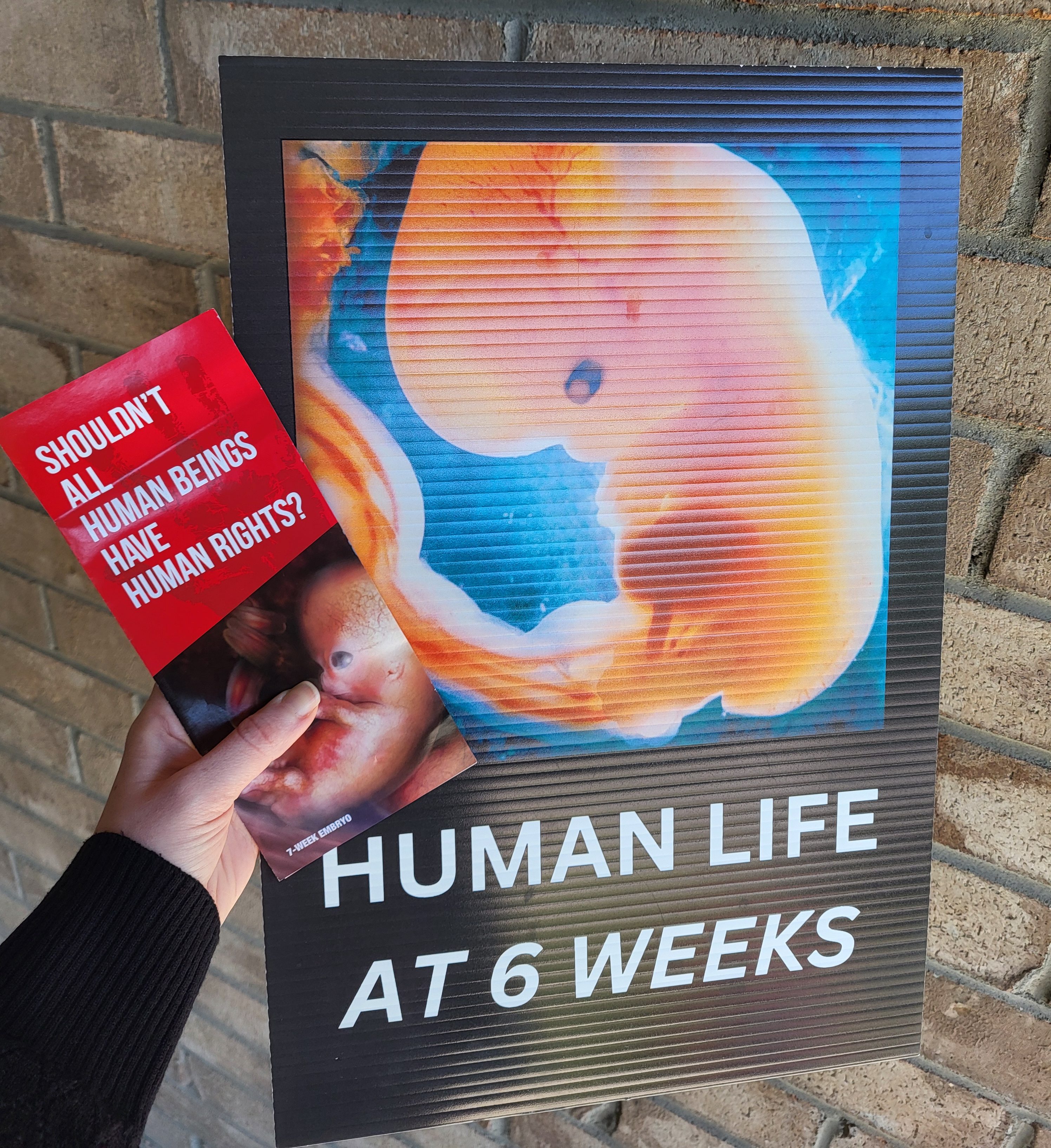
During street outreach in June, I spoke with Sadi in downtown London. He was pro-choice and said that abortion was up to people’s own decisions, and he supported it until at least 7 or 8 months into pregnancy. We talked through the Human Rights Argument, but I found that we were going in circles, and his stance didn’t change. At one point, he told me that early on in pregnancy, the embryo was “just a bit of blood” (a variation on other terms I’ve heard, like “clump of cells”). I had my pamphlet open to a photo of a 10-week abortion victim, and I clarified to him that the reason that child was bloody was because she’d been torn apart in the abortion process. As we looked at the photo together, I explained to him the surgical abortion that had suctioned that baby’s body into pieces. He was stunned. “How far along is that?” “10 weeks – 2 and a half months,” I replied. I then showed him the 7-week living embryo on the pamphlet’s cover, and pointed to our nearby sign with a photo of a 6-week living embryo. I shared with him that a 6-week embryo already has a heartbeat and detectable brain waves. He was again shocked at how developed the baby already was, so early on in pregnancy. He said over and over, “I didn’t know any of this.”
I then challenged him further and said, “At fertilization, that child obviously looks VERY different from us, not developed at all. But if we know that at fertilization, at conception, that there’s a new human life – even though she’s just one cell big – then shouldn’t it still be wrong to kill her? Shouldn’t she still get human rights?” He agreed with me that she should. I asked him then if he still thought abortion should be allowed in any circumstance. He told me it was wrong, but, what about if the mother’s life was in danger? I clarified for him that abortion isn’t medically necessary because if we need to deliver the baby to save the mom’s life, there’s no medical reason to intentionally kill the baby first. He agreed with me that that view made sense.
As we continued talking, I asked him what his opinion on abortion was now. He said to me, “I didn’t know ANY of this. Based on what you explained to me, I have to change my mind. We have to be against this. Thank you so much.” He shook my hand and left completely pro-life!
What about unwanted children?
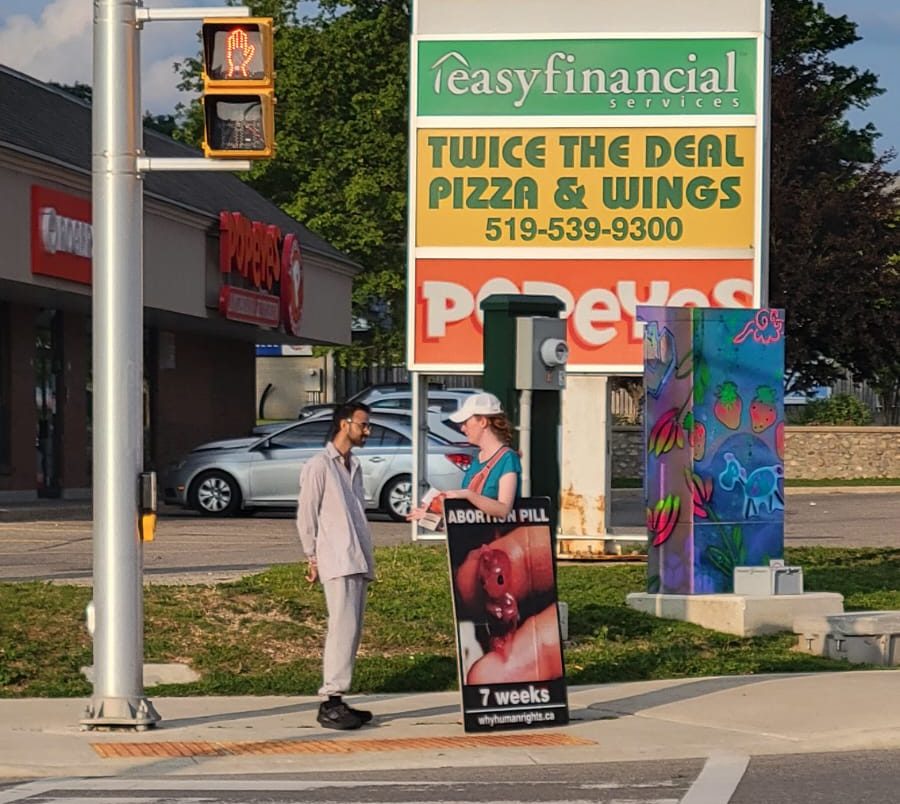
In July in Woodstock, I spoke with a pro-choice man who was very much a moral relativist at the start, on all sorts of issues. The start of the conversation was…a bit of a wild time, as it was difficult to tell if he thought ANY actions were truly wrong. But after talking with him about moral relativism for a bit, we were able to clarify that we both agreed that our society should have some laws to protect people from violence.
He repeatedly brought up the concern that our society didn’t have the “infrastructure” to support the children who’d be born if they weren’t aborted. Wouldn’t all those children grow up unwanted? I talked with him in detail about the Turnaway Study, which studied the views and outcomes of women who initially wanted an abortion but were “turned away” and couldn’t get one. I explained that 5 years after being denied an abortion, 96% of those women said themselves that they no longer wished they’d gotten an abortion. And the vast majority of them raised their children themselves. He was VERY surprised and encouraged to learn that information, and his tone in the conversation suddenly became much more open and curious.
We continued talking about how, even in bad situations, we shouldn’t violently kill children as a solution. He questioned the humanity of the pre-born child, however, and asked me, “But is a fetus an individual?” I replied to him, “Well, looking at science, if 2 humans reproduce, what species is their offspring?” “Human,” he said. “Right,” I said to him, “And if that human offspring is growing, then…” He finished the sentence for me: “Then it’s a life.” Apparently eager to learn more, he asked me what I thought the top three “toughest” pro-choice arguments were, and how I would respond to them as a pro-lifer!
Our lengthy conversation got cut short, because the OAA activism team had to pack up for the night. The young man told me he still wanted to think more about the issue of abortion, and do more research. But before leaving, he thanked me for the conversation. And he said to me, “I think most people here [in Woodstock] would agree with your arguments. And I think a lot of people around the world would, too.”
Any time I attend outreach, I know that the time is “covered” not only by the prayers of myself and my teammates, but also by the prayers of my friends, my family, and countless Christians I’ll never meet. Abortion is ultimately a spiritual battle. We know that when we see hearts and minds change, the Holy Spirit is always at work, softening their hearts to the plight of aborted children. To all those who pray for an end to abortion, thank you.
To get involved with either teams mentioned, reach out to London Against Abortion or Oxford Against Abortion!
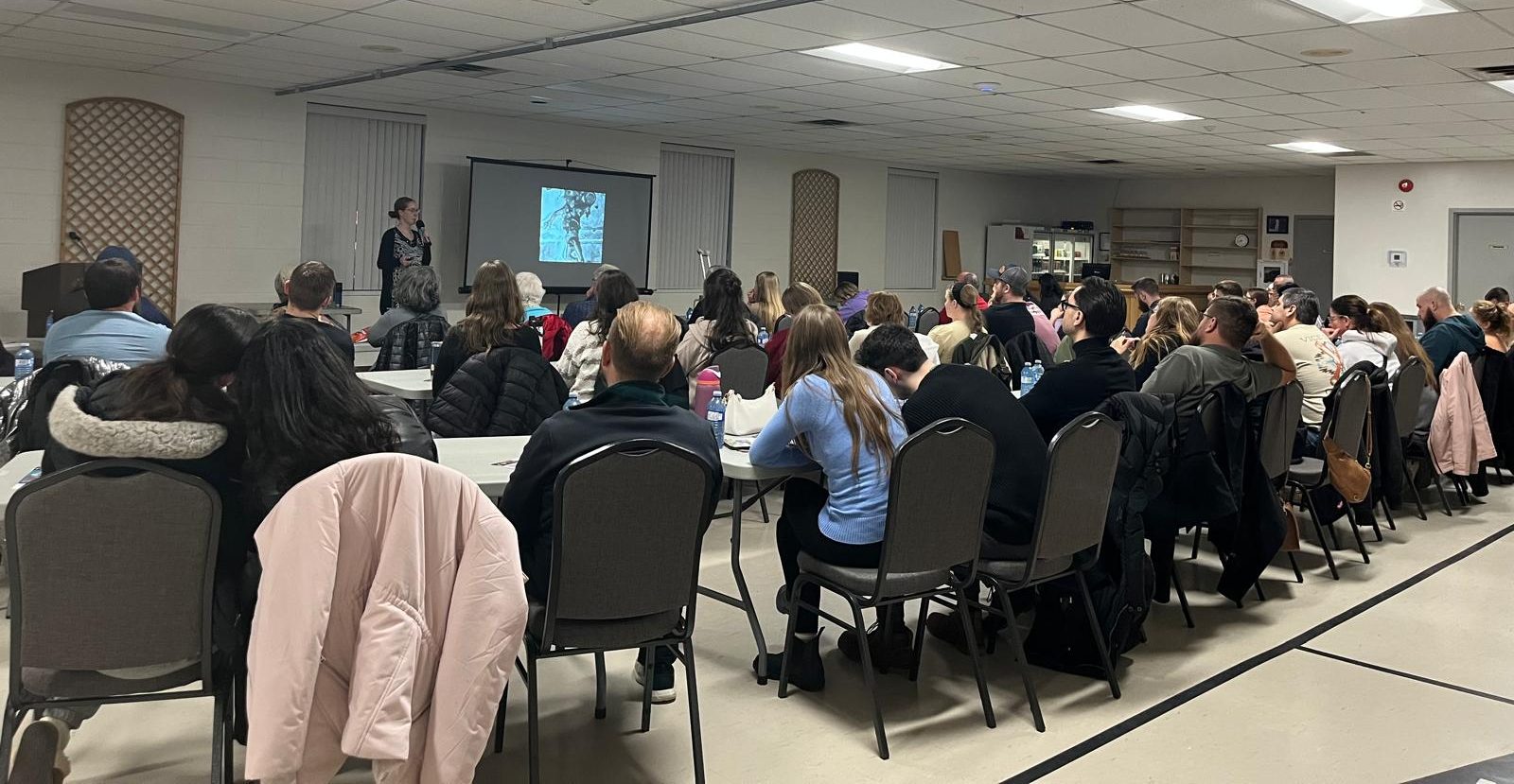
Want to learn how to have effective dialogue about abortion, to defend pre-born children? If you would like a Pro-life Conversation Training brought to your community, reach out to me here.
-
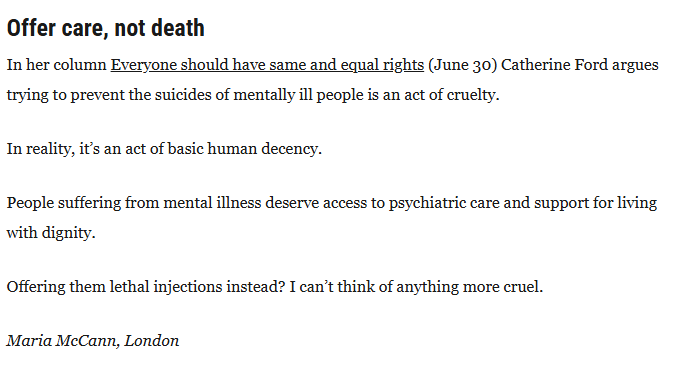
Offer Care, Not Death: Letter To Editor
I was horrified by a recent full-page article in the London Free Press that promoted suicide-on-demand, after a Parliamentary committee wisely recommended against expanding MAiD for mental illness in Canada. Here is my letter-to-the-editor in response:
-
Keeping Score
June 2025 came in like a freight train. It knocked me off my feet.
I suddenly experienced dizzy spells, and a physical and mental heaviness so intense that I struggled to leave my bed and stand up. But my recent blood work had come back normal. My joint pain levels had remained blessedly stable and low. I’d been able to travel to Vancouver, Halifax, Utah, and New York, just in the previous few months. What was wrong, this time?
The body keeps the score. I’m grieving something, I thought. But I don’t know what.
New grief had reawakened old grief. Both demanded to be understood. And I had no idea just how many layers of pain both wounds would hold. If I had known, I might have just stayed lying down.
What do I do? I know I’m upset about…something? If I wasn’t sure what, I couldn’t know how to process it. But I tried to take seriously what I’d learned over the years with chronic illness: the importance of soothing the nervous system, especially with movement, to return to a sense of safety. Regardless of what was causing my symptoms, that principle remained true. But I felt so dizzy standing up.
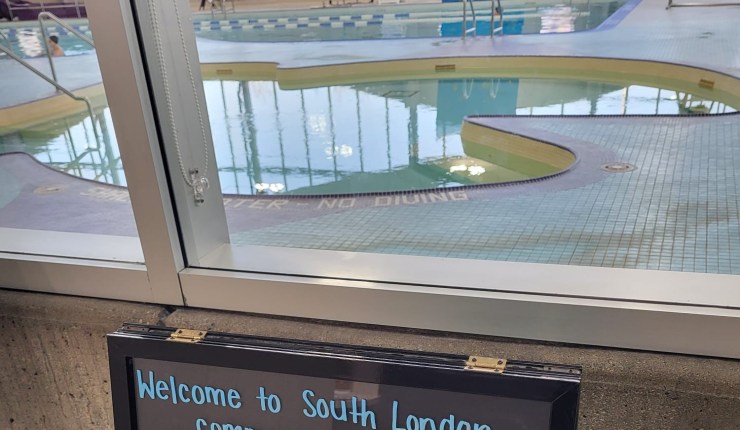
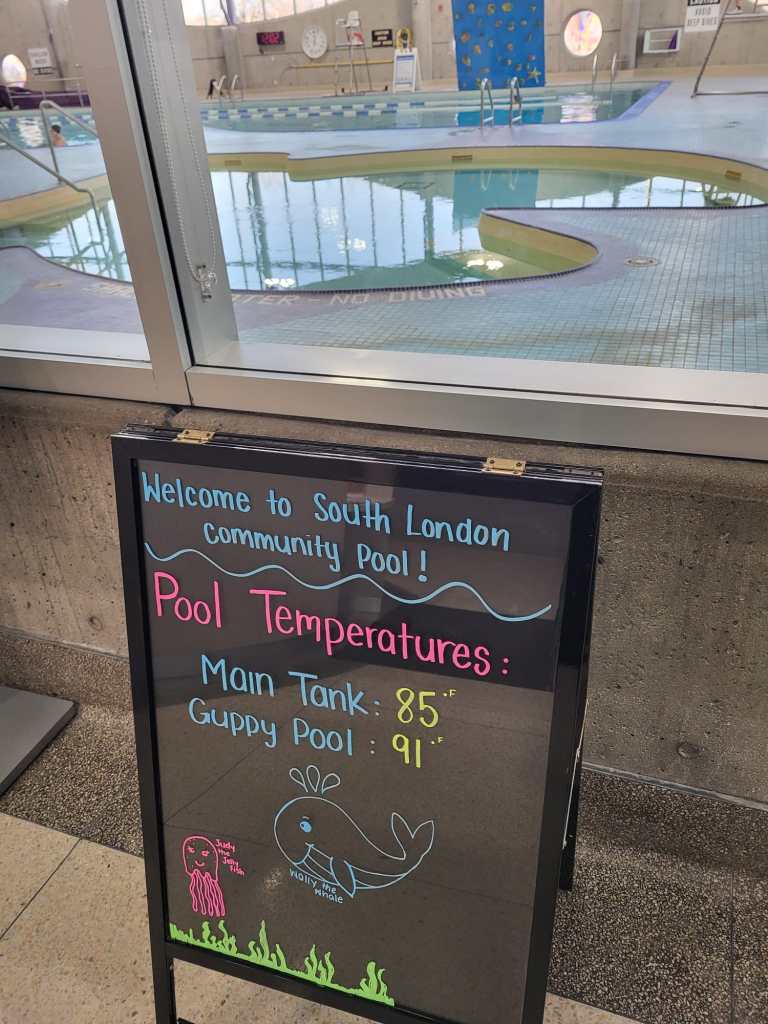
The pool. I could go to the pool and try to do some gentle exercise there. At the very worst, I couldn’t fall if I got dizzy in the water. I could just float if I needed to.
I’d already booked my bus to the pool through paratransit a few days earlier, and even though I wanted to cancel, I knew I’d possibly get penalized for a late cancellation. So I gritted my teeth, packed my towel, and forced myself out of bed that Friday morning. It was a good thing that paratransit had door-to-door service, because if the bus hadn’t come right to my doorstep, I don’t think I would have left the house.
I got to the pool. One older woman in the change room smiled and made small talk. I normally love to talk to strangers, but today, I could only get out a few half-hearted replies.
It was a recreational swim hour. You normally can’t swim laps at a rec swim. Usually, you have to bob along while watching constantly for 5-year-olds who might cannonball into the water a few inches from your face. But it was noon on a weekday, so the pool was nearly empty. As I waded in, I saw that there was one lane roped off, which I’d never seen during a rec swim over the years. I asked the lifeguard, “It’s open for swimming laps?” It was.
“It’s there just for you!” the woman from the changeroom said.
I alternated between swimming some slow laps and walking (/dog paddling) some. I relaxed into the water and let it carry the heavy weight of I don’t know what that sat on my chest. It was safe to fall apart here. You can’t tell that someone’s crying if their face is already wet.
We returned to the change room to towel off. The older woman continued her attempts at making cheerful conversation. “I’m sorry, I can’t talk much. Just having a very hard day,” I ended up spilling out to her. “That’s alright, I shouldn’t have pried,” she said. “Normally I do like to talk to chat with people,” I confessed, “It’s just a very hard day today.”
“That’s OK,” she said kindly. “I hope we see you here again.”
-
Your 25 Minutes Can Save Countless Lives.

I have a short, blunt ask: Can you commit just 25 minutes of your time, to save lives from assisted suicide?
What’s happening?
Currently in Canada, assisted suicide—euphemistically called “Medical Assistance in Dying” (MAiD)—is claiming more and more victims. Legal, lethal injections killed 16,499 Canadians in 2024 alone. Euthanasia is already legal for adults with “grievous and irremediable medical conditions”, whether that condition be an illness or a disability. Our euthanasia regime is fuelled by ableist, ageist, and classist discrimination. Currently, though, the law excludes a person from eligibility for MAiD if their sole underlying medical condition is a mental illness.
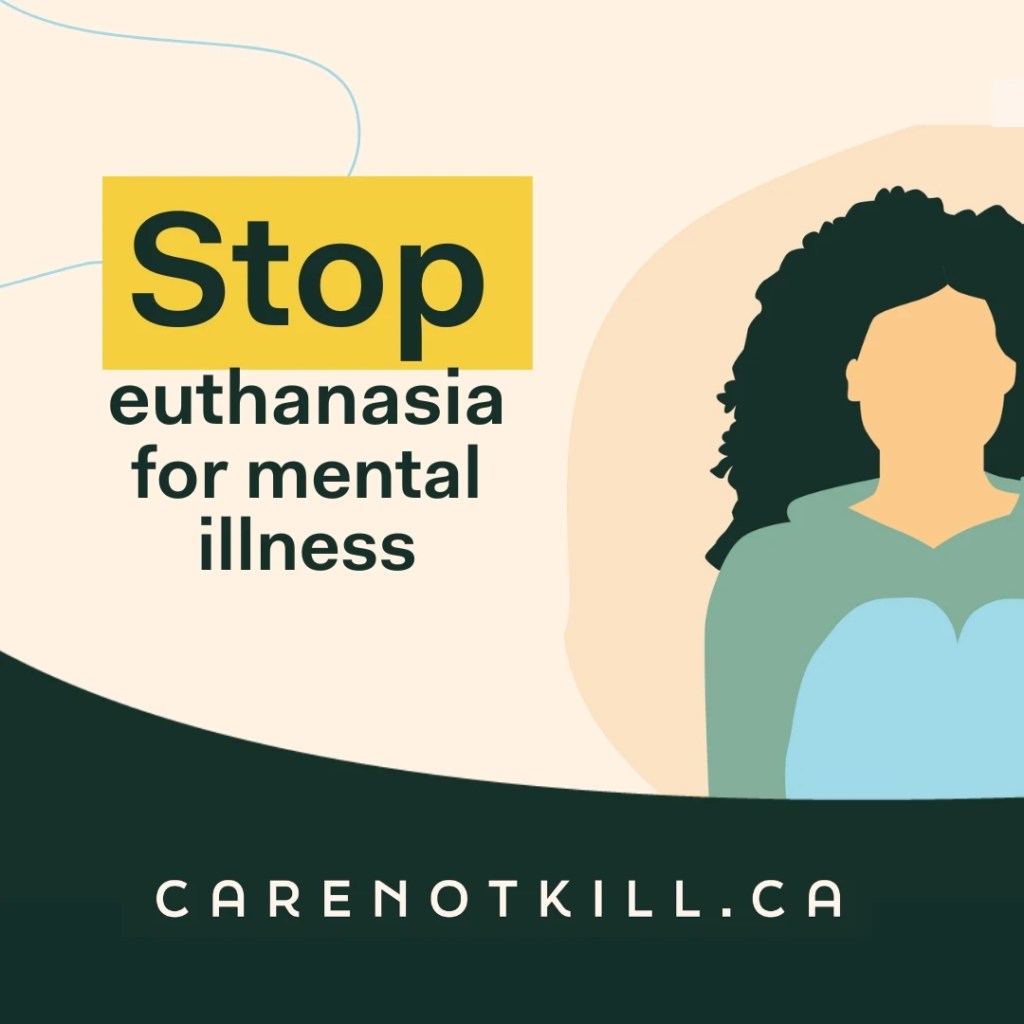
But if nothing changes, on March 17, 2027, MAiD will become legal solely on the basis of mental illness. People suffering from depression, eating disorders, PTSD, and other psychiatric illnesses, will be eligible for suicide assistance, when they desperately need suicide prevention.
Take Action: Support Bill C-218
MP Tamara Jansen has introduced Bill C-218, the Right to Recover Act. This bill would amend the Criminal Code of Canada and permanently stop the scheduled 2027 expansion of euthanasia to those suffering solely from mental illness. Bill C-218 would protect countless people from suicide. But this Bill needs broad, bipartisan support in order to pass its next vote on March 4th, 2026. It’s crucial we make our voices heard before then!
Here’s how you can help:
- Take 5 minutes to email your Member of Parliament about Bill C-218. The website CareNotKill.ca makes this super easy: just click on “contact your MP“.
- Request a 20-minute meeting with your MP to discuss why you support the Bill, and why you hope your MP will vote in favour of it.
- Here’s a sample letter for requesting a meeting.
- Dear MP [Last Name],
- Thank you for your continued work as my Member of Parliament.
- I wanted to reach out to you regarding Bill C-218. If passed, the bill would repeal the pending expansion of euthanasia to people with mental illness as their sole underlying condition.
- I’m wondering if we can schedule a 20-minute meeting to discuss this issue further. I would appreciate the opportunity to briefly explain why I think you should support Bill C-218. And I would love to hear your perspective on this bill. I would appreciate if we can meet in the constituency sometime between January 12 and 23, 2026. Please let me know what time works best for you.
- Sincerely,
- [name]
- [postal code]
- [phone number, if desired]
- Share simple, powerful talking points about why this Bill is crucial for protecting vulnerable Canadians from suicide. For practical help on how to have an effective meeting with your MP, reach out to the organizers of CareNotKill.ca via email: info@arpacanada.ca

Here are some suggested talking points:
- MAiD-for-mental-illness harms suicide prevention efforts.
- Groups like the Canadian Association for Suicide Prevention are calling on the government to halt MAiD for mental illness, to help promote a culture of suicide prevention and mental health supports, rather than suicide assistance. “As mental health advocates, CASP wants to ensure those suffering from mental illness are treated by medical means and not through assisted dying.” (Source)
- MAiD-for-mental-illness is opposed by the disability community.
- The UN Committee on the Rights of Persons with Disabilities has formally asked the Canadian federal government to stop the expansion of assisted death for mental illness, and expressed deep concern about MAiD’s impact on the disability community: “The UN committee also asked the federal government to end the proposed expansion of MAID for patients with mental disorders, but no physical illness, and to ban any federal support for any requests in advance.” (Source)
- Our healthcare system needs investment in mental health support—not MAiD.
- Consider that in Ontario, nearly 2.5 million people–nearly 16% of Ontarians–do not even have access to a family doctor. Given that countless Canadians aren’t getting access to primary health care, how can we expect people with mental illnesses to access the specialized care they need?
- The Fraser Institute reported the alarming fact that “Canadians in need of psychiatric care face a typical wait of nearly 25 weeks after GP referral”. Clearly, our country needs more funding and resources towards treatment for mental illness. If a suffering person doesn’t have a psychiatrist, or even a family doctor, and can’t access treatment for her psychiatric condition, then the offered “choice” of MAiD is no choice at all.
- Share your story.
- How have mental illness and suicide impacted you? Why is suicide prevention important for you, and for your loved ones? If you feel emotionally safe to do so, consider sharing your personal stories about mental health.
- WATCH: MP Andrew Lawton shares his journey as a suicide-attempt survivor:
What’s at stake?
We have the opportunity to prevent the further expansion of assisted suicide. But the window of time is limited. Your voice can make a difference. Elected officials are far more likely to take an issue seriously when their constituents speak up about it, but particularly when we present our concerns in-person. Please take 5 minutes to email your MP, and request a 20-minute meeting in the new year.
The lives of those with mental illness—the lives of our loved ones—hang in the balance.
-
PODCAST: Coffee, Commerce & Catechesis
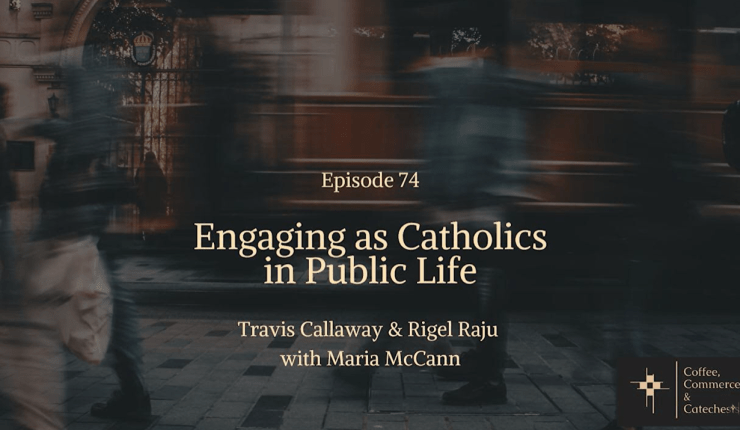
It was a privilege to join Travis and Rigel at the Coffee, Commerce & Catechesis podcast for a discussion on what it means to live out our Catholic faith courageously in the public sphere. What does Christ’s Lordship over every aspect of our existence look like, in daily life? We had a wide-ranging conversation on that question, drawing inspiration from Bishop Robert Barron’s exhortation that Christianity be “a relentlessly public religion“.
Watch the interview here:
Also available on Spotify:
Besides subscribing to their podcast, I also recommend you check out Rigel and Travis’ long-form writing on Substack: https://cofcomcat.substack.com/
-
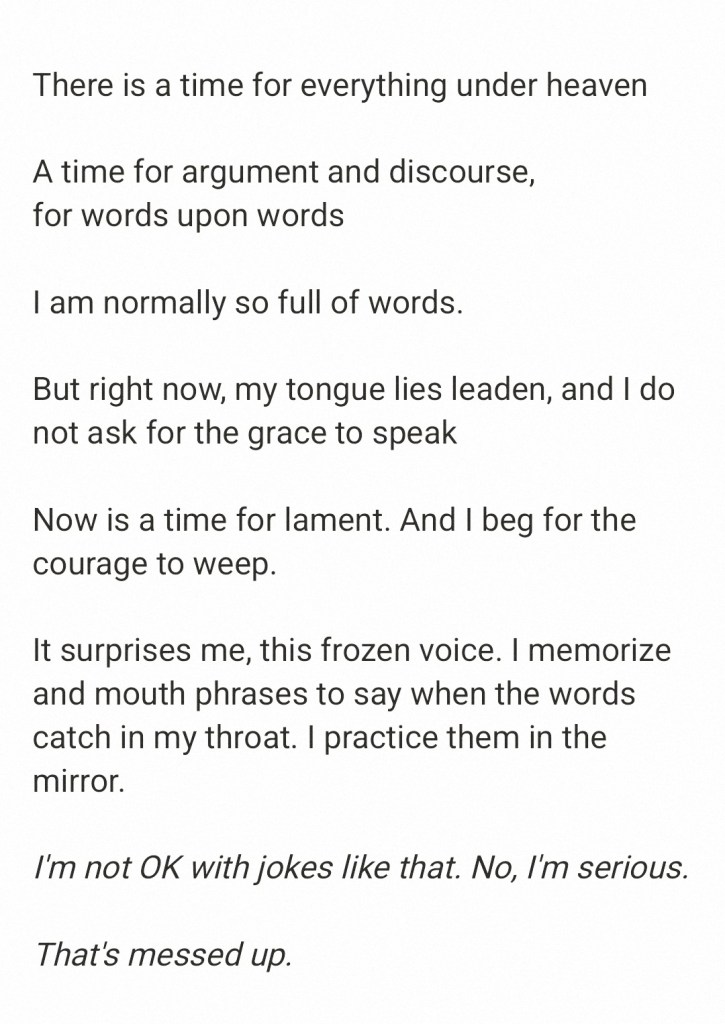
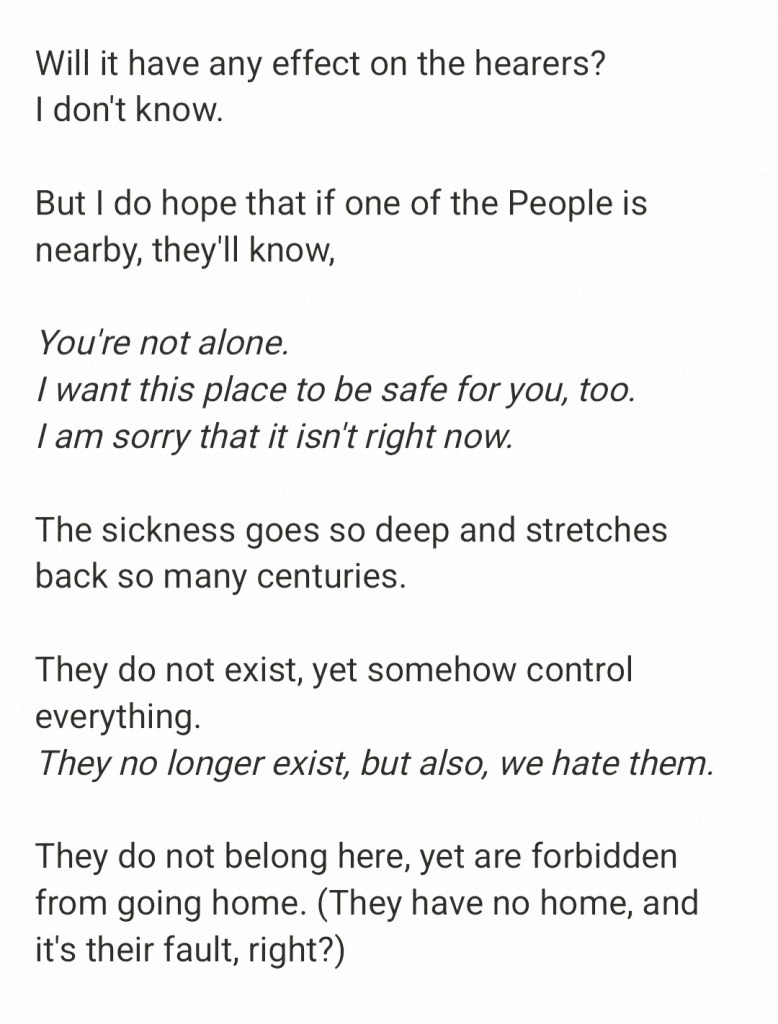
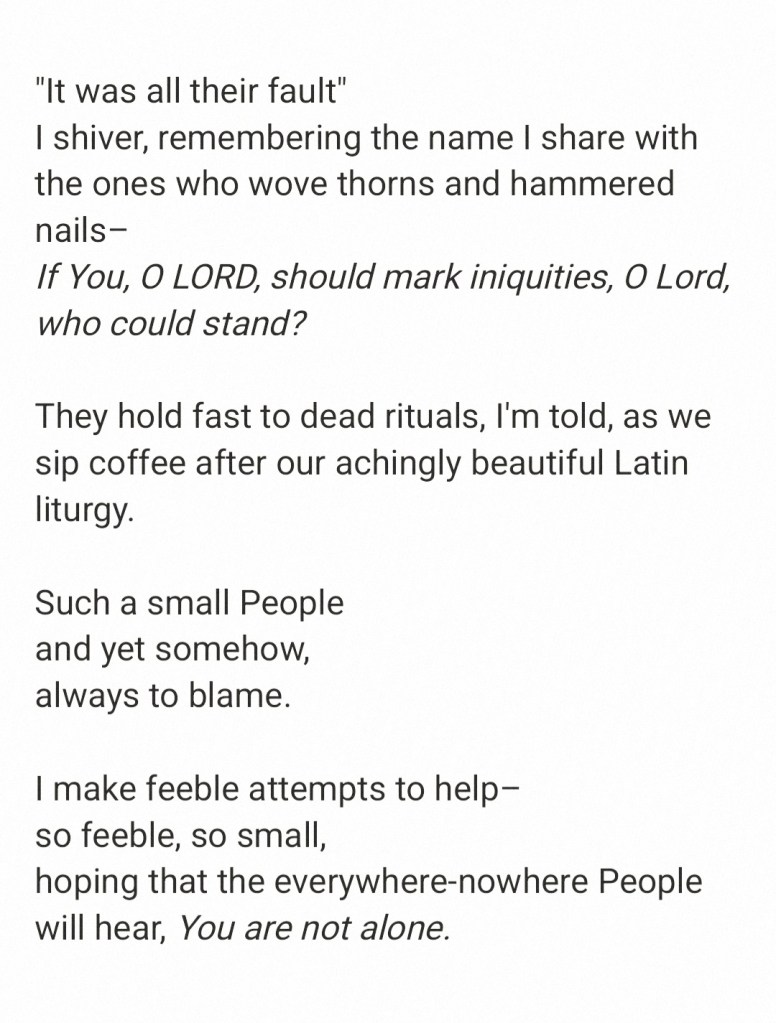
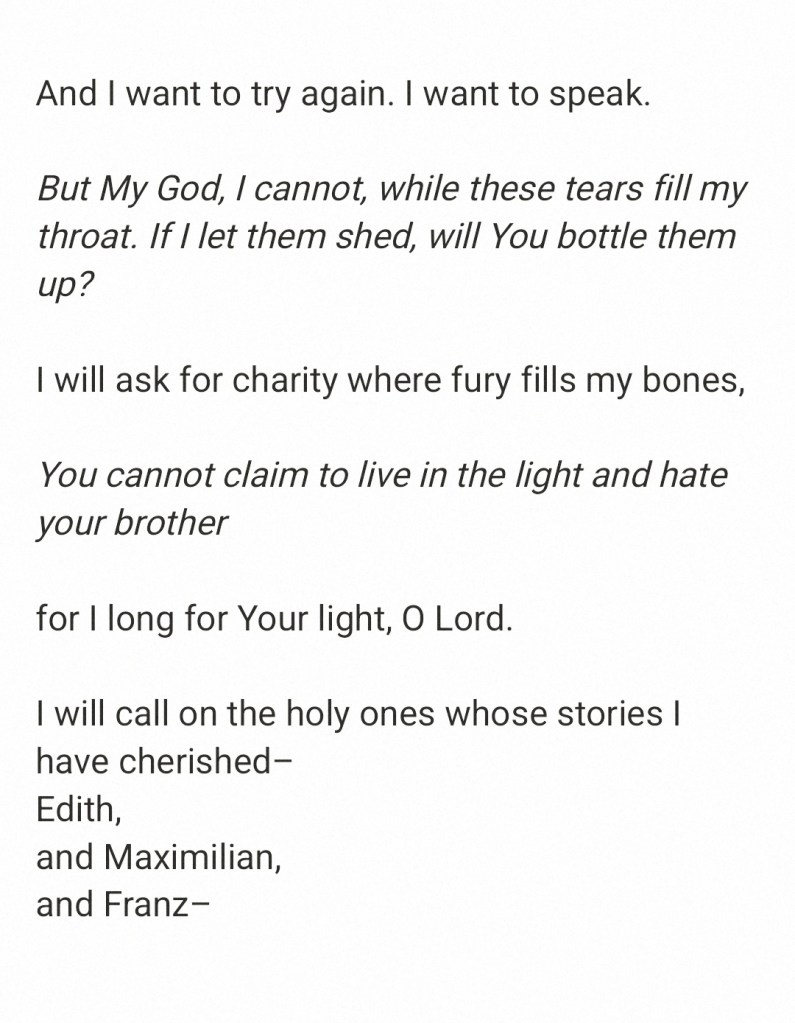
A Time for Lament
-
Eastertide

Lent is
A thready heartbeat
A long obedience, a longer defeat
Weary Chronos whispers:
Remember, you are to die.
Eastertide is
The heartshock
The crescendo
Glad Kairos cries:
But love,
You are to rise!
-
“What is your vision for your vocation?”

It was a true blessing to journey with the Cardus NextGEN Fellowship over the past year. Our cohort’s final weekend together in Halifax was bittersweet, but a great conclusion to a year of community, learning, and encouragement in the Lord.
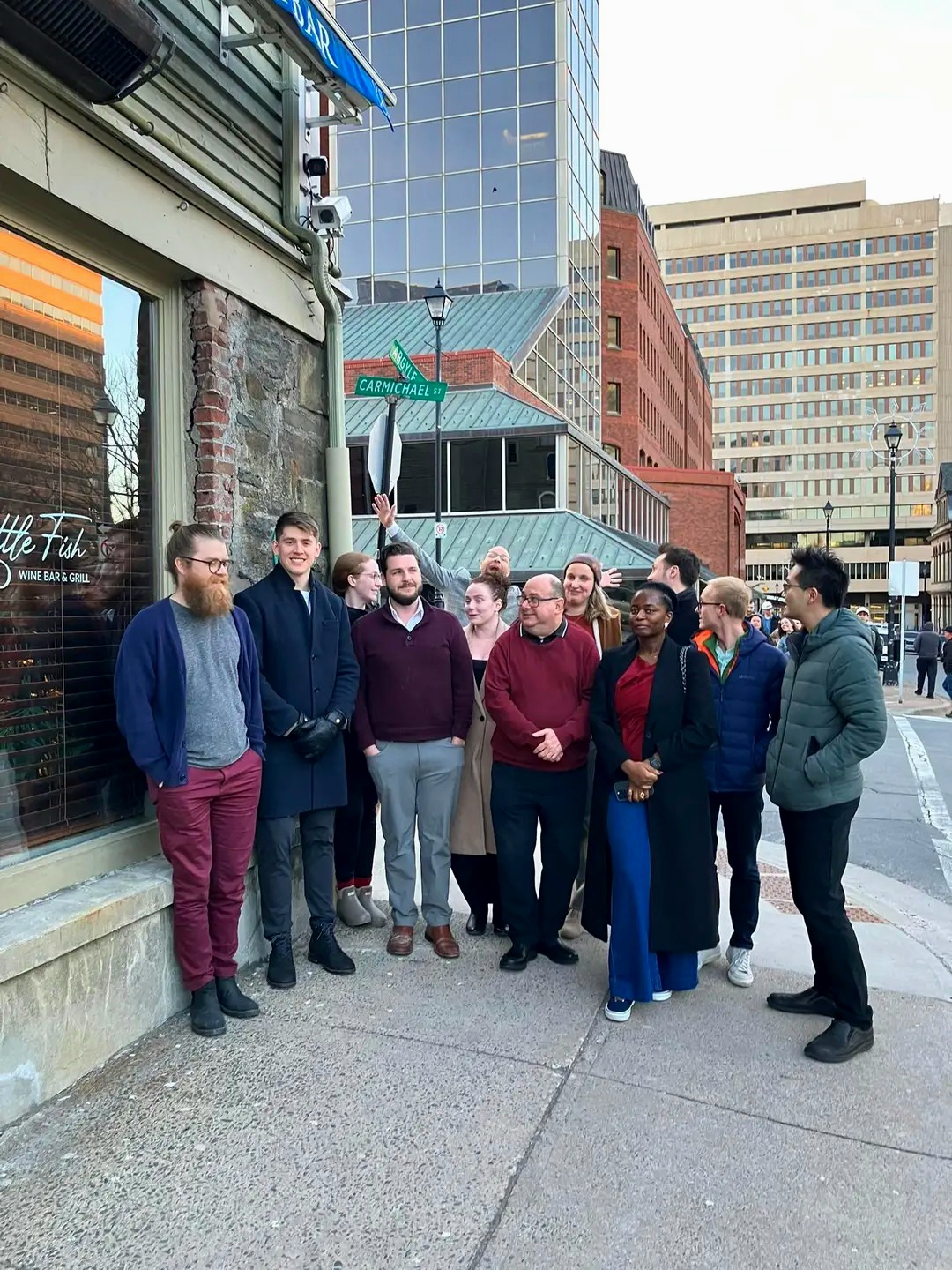

For the final conference, each of the Fellows was asked to give a short presentation answering these questions:
“What is your vision for your vocation?
How would you articulate to others where and how you are being called to use your gifts in God’s service? What challenges do you want to take up? What changes in your sphere of influence or in the world do you want to see?”
Also, select a brief reading you would like to share with the other Fellows that relates to your vision for your vocation. It can be an article, video, or other resource… Something to get us thinking and talking with you about what you care about.”
Below are the “answers” I have (so far!) to these rich questions, and I am excited to see how God will illuminate the path He has for me.
Back in January, our Fellowship met for a (surprisingly sunny) weekend in Vancouver. During one of our sessions, Biblical scholar Dr. Mariam Kovalishyn spoke on the wisdom contained in the letter of St. James. One theme she highlighted in the letter was the danger that can come with the unbridled pursuit of our desires. I asked her a question I’ve been wrestling with, about the tension I see in Christianity when it comes to our desires.
On the one hand, there’s the common message that our desires are the things that most easily lead us astray from God, because we make idols out of them so easily. But on the other hand, there’s also the message that God speaks to us in our desires, and that He is really at the root of them. Even a disordered desire presupposes a rightly-ordered desire which is, at bottom, the desire for God. “These messages seem like contradictions,” I said to her. “How do we reconcile them?”
And I loved her answer.
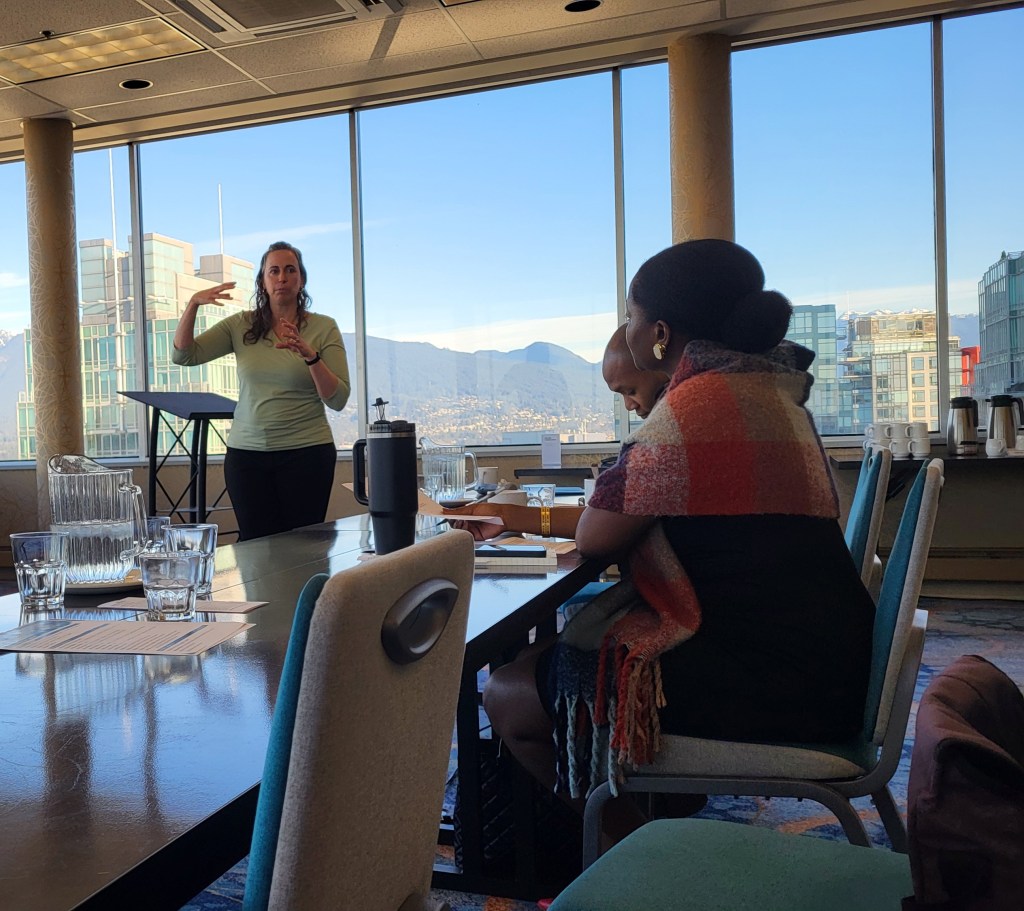
Dr. Mariam’s seminar in Vancouver She first affirmed that, yes, pursuing what we want blindly–without surrender and discernment–can easily lead us to all sorts of idolatry. But then, she pointed to the story of St. Peter. When Our Lord called St. Peter, Christ didn’t say to him, “Follow me, and I will make you a…theologian.” Or “a teacher,” or “a healer.” He did make him all of those things, but He called him to be a “fisher of men”. After all, who was Peter? A core aspect of his identity was that he was a fisherman. Dr. Kovalishyn said, “Fishing was the one thing Peter knew how to do, and the one thing he’d do when he didn’t know what else to do.” God knew that about him because He created him. God shaped his heart in that particular way, and then called him to use his desires and gifts for His glory.
The same is true for me: God wants me to make a gift of my life for His glory, including through my (sanctified) desires.
So, I’d like to look back on my life and ask the question, “What did I do when I didn’t know what else to do?” Because the truth is that I have known many a rock bottom, where I had no idea what to do. And instinctively, in my better moments, I gravitated towards at least two things: justice-oriented work to try to help the vulnerable, and scholarly work in contemplation of the beautiful.
To put it bluntly, I volunteered, and I read poetry or listened to lectures.
Justice-oriented work, practical service to neighbour, matters greatly to me—and so do the Humanities. It’s no secret that the Humanities are massively impractical, though. I’ve wrestled with justifying time in that sphere when there are so many areas of pressing human need. And I’ve wrestled with how to understand the question of vocation at all in the complicated context of a life with chronic illness.
These questions found a surprising meeting-point in C.S. Lewis’ 1939 sermon, “Learning in War Time,” and I asked the Fellows to read it in preparation. In this sermon, Lewis addresses a group of Oxford students and knows that they likely also question the value of their intellectual work while living in a world at war. And they wonder, practically, how to pursue their callings in the midst of deep social upheaval. As I consider my own vocation, I will draw on three themes from his sermon that grip me:
- The call to justice-oriented work;
- The call to cultivate beauty, especially through the Humanities; and,
- The reality of uncertainty, and the practical skills and spiritual aid needed to face it.
Justice-Oriented Work
So often in prayer I have asked, “Lord, what am I supposed to do? What do You want me to do with this day, with this week, with my life?” I am then reminded, however, that God has said so much in His Word about how He wants me to live.
Micah 6:8 comes back over and over. “He has told you, O mortal, what is good; and what does the Lord require of you but to do justice, and to love mercy, and to walk humbly with your God?”
And throughout Scripture, He shares His heart for the weak and the marginalized. Proverbs 31:8-9 says, “Open your mouth for the mute, for the rights of all who are destitute…defend the rights of the poor and needy.”
I am called to love my neighbours, and especially to care for my neighbours who are vulnerable or voiceless. This calling obviously extends to many areas, but it’s been particularly important for me through work in the pro-life movement. No one is more vulnerable than a pre-born child. No one is more voiceless. The tragedy of abortion has weighed on my heart for years, and I’ve long known that the pre-born are a group of neighbours I have to speak for.
To get more specific about where and how I think I’m called to serve in the pro-life movement, I prioritize work as a communicator and as a peacemaker.
Communications
Communications work is the area I’ve served the longest in the pro-life movement and have already elaborated on elsewhere. I will say that practically, I want to improve in communicating using simpler, more understandable language. “Less jargon” and “more story-telling” are big goals for me. Whether in presentations or in other advocacy, I want to speak in a way that’s accessible and persuasive.
Peace-Maker
Something that has increasingly mattered to me over the course of the Fellowship is being a peacemaker. The pro-life movement, like other social justice movements, is full of passionate people with strong opinions. (Not that that would describe me in the slightest.) One common problem, though, is the reality of disagreements—whether over mission or strategy, over religious or philosophical views, etc.
I’ve seen two common approaches to navigating those deep differences. One common strategy is that of peacekeeping (or what I sometimes think of as the “Kumbaya approach”). Some will avoid conflict by saying, “Well, our job is simply to be faithful without worrying about results. Therefore, we will not criticize any approach that anyone takes because God will always bring good out of it.” I think that response is fundamentally flawed (and not a good representation of Divine Providence). In order to engage in critical thinking about strategy and vision, we have to be willing to criticize when necessary, and recognize that not all approaches will work equally well in every context. And effectiveness matters if the goal is saving children’s lives and fostering cultural change.
Nevertheless, I sympathize with the people who adopt the “Kumbaya” approach, because they’re often trying to avoid the other end of the spectrum: criticism that devolves into contempt, and sometimes leads to toxic infighting.
When Elizabeth Oldfield spoke to our Fellowship in July 2024, she said something that’s been rattling around my brain for months. She said, “Contempt is poisonous. If you notice contempt creeping in, go and fall to your knees.”
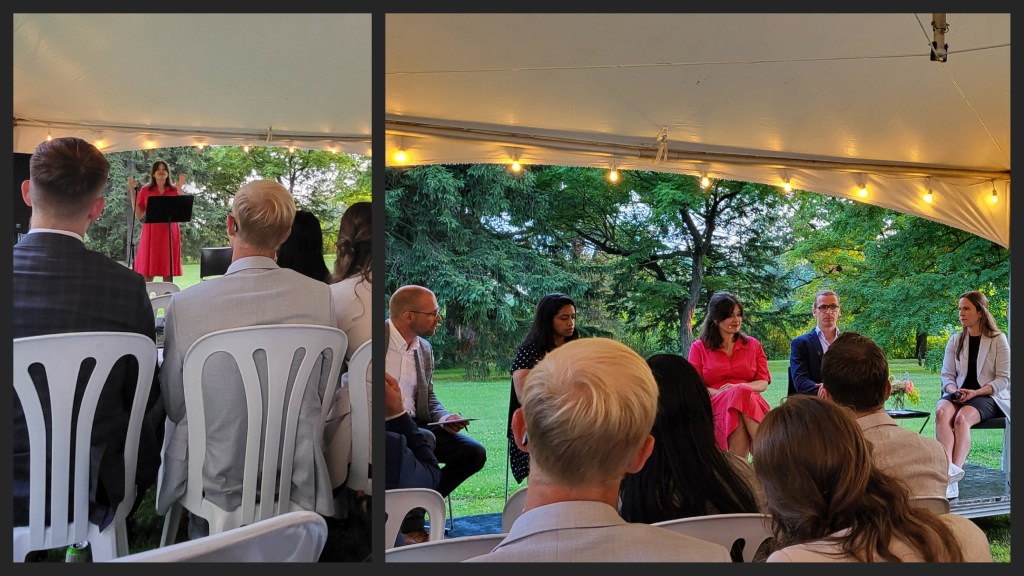
Elizabeth Oldfield speaking at our first weekend in Hamilton, ON I already knew about the dangers of cynicism creeping in, but I had not considered the dangers of “criticism-for-actions” gradually souring into not just frustration, but contempt for persons.
I want to learn how to walk the virtuous middle path. That means refusing to take the “peacekeeping” approach, which shuts down critical analysis and thwarts growth. Crucially, though, I also must reject the path of contempt. It leads to an ever-shrinking circle of people I’m willing to work with, and an ever-tightening vise around my heart.
I want to learn from Christ how to be a peacemaker. That involves resolutely facing conflict, and resolutely refusing to dehumanize anyone involved. But I can’t cultivate peace in pro-life spheres unless Christ cultivates it in my heart. He leads me beside still waters, He restores my soul. And one of the ways He does so is through encounters with Beauty.
Beauty-Oriented Work & the Humanities
Responding to injustice isn’t all that Christ asks of me, or of you.
In Philippians 4:8, He instructs us through St. Paul, “Finally, brothers, whatever is true, whatever is honorable, whatever is just, whatever is pure, whatever is lovely, whatever is commendable, if there is any excellence, if there is anything worthy of praise, think about these things.”
That brings me to another aspect of my vocation that has become clearer to me over my time in NextGEN. (It shouldn’t have surprised me, but it did, because I couldn’t see the forest for the trees.) I want to cultivate Beauty through the Humanities, especially through literature and philosophy.
As I’ve mentioned, I’ve sometimes felt a tension between my interest in the Humanities vs. the necessity and urgency I see for pro-life work. As Lewis asks, in the middle of a crisis, aren’t scholarly pursuits a frivolity—”like fiddling while Rome burns?” He addresses this question head-on, in a practical and helpful way. He first points out a key truth: that we are always in a world at war. We’re always living in times of crisis and catastrophe. We can’t wait until peacetime to pursue Goodness, Truth, and Beauty. We have to start now.
He also highlights the very practical reality that everyone will engage in cultural activities in one way or another. The question is, will I pursue God-honouring ones that promote my flourishing, or ones that work in the opposite direction?
Lewis says, “You are not, in fact, going to read nothing, either in the Church or in the [military] line: if you don’t read good books, you will read bad ones. If you don’t go on thinking rationally, you will think irrationally. If you reject aesthetic satisfactions, you will fall into sensual satisfactions. There is therefore this analogy between the claims of our religion and the claims of the war: neither of them, for most of us, will simply cancel or remove from the slate the merely human life which we were leading before we entered them.”
Fair point, Jack. Surely spending some time reading poetry will be better for me than doomscrolling on my phone.
I want to, by God’s grace, endure in work in the pro-life movement. I’ve realized that immersion in the Humanities will actually help sustain me in that work, rather than “distracting” me from it. In order to endure more difficult times, I’ll need to be nourished by beauty.
There’s a level even more fundamental than that, though, in the value of the Humanities. I don’t think that any beauty should be valued merely for the instrumental end of “helping Maria’s mental health,” though it certainly does that. Beauty’s value lies even deeper.
I was fascinated by a session our cohort had with Dr. Amy Sherman, where she spoke about two aspects of our vocations. Some aspects of our lives, she noted, will be restorative, i.e. responding to the reality of a post-Fall world. Disciples are all called to co-labour with Christ in repairing and restoring what is broken.
She also pointed out, though, the importance of generative work that offers, in her words, “a foretaste of Kingdom goodness.”
A foretaste of Kingdom goodness.
Responding to darkness and brokenness is the reality of a post-Fall world. But in the beginning, it was not so. And in the end, it will not be so. We were called to work in Eden before there was any brokenness to restore. And we will one day live in the new creation, where God has wiped away every tear and swallowed up death forever. Our vocations necessarily extend beyond the restorative.
I realized that I must contemplate beauty (and truth, and goodness), not merely as an antidote to darkness, but as a foretaste of kingdom goodness. The darkness is ultimately an aberration. The goodness is that which is fundamental.
In 2024, I attended a 150th birthday party for G.K. Chesterton (and it may remain the greatest day of my life.) At the party, I was gifted a copy of a quote by him. It now hangs in my room.
I find it hard to read his words aloud without choking up:
“There is at the back of all our lives an abyss of light, more blinding and unfathomable than any abyss of darkness; and it is the abyss of actuality, of existence, of the fact that things truly are, and that we ourselves are incredibly and sometimes almost incredulously real…
He who has realized this reality knows that it does outweigh, literally to infinity, all lesser regrets or fears of negation, and that under all our grumblings there is a subconscious substance of gratitude.”
The goodness, my friends, is what is fundamental. The darkness is a passing shadow. The Light endures.
Honestly, there’s a big “question mark” in how I should move forward in the Humanities. My chronic pain affects my wrists and hands acutely, which makes the writing process tricky. I’ve gotten better at using voice-to-text, but it’s still extremely difficult to dictate rather than write. (Though it does give me the fun opportunity to call myself a dictator.)
I do know that there are at least four writers whom I want to focus on and read more deeply:
- T.S. Eliot, a Modernist poet whose work has haunted me since I was a teenager;
- G.K. Chesterton, the English Catholic writer whom I’ve already gushed about;
- Dr. Viktor Frankl, a Jewish-Austrian psychologist who survived the Holocaust and wrote the landmark book Man’s Search for Meaning; and,
- Pope St. John Paul II, whom we studied a bit in the Fellowship.
As a concrete next step, I plan to apply for the Lumen Gentium Forum in Toronto. It’s a program for Catholic young professionals and includes deeper reading in Catholic Social teaching. I think it’ll be especially helpful for learning more about John Paul II’s work.
Clearly, I’ll have lots of reading to do. Writing will have to happen slowly and within limitations, and I am learning to make peace with that.
The Reality of Uncertainty
Because living with chronic illness means that I live with great uncertainty. I never know for sure what my body will be able to do on a given day, let alone 5 years from now. In some ways I felt frustrated by the question, “What is your vision for your vocation?” It felt like a “luxury question” for someone with a certain level of health and wealth. But I know that the call to holiness is for everyone, and it is anti-Gospel to view illness or finances as a barrier to holiness. I also know that closing myself off to life’s possibilities won’t prevent disappointment. It will simply guarantee failure.
And of course, I don’t have the market cornered on uncertainty—it’s a reality of the human condition. As Lewis points out, we are always in a world at war. I think back to this time in March, 5 years ago. I suspect that for each person reading this, certain life plans changed on a dime as we plunged into a global pandemic and came face-to-face with our lack of control.
One practical approach that helps me in living with uncertainty is a concept I learned in Acceptance and Commitment Therapy: the difference between a value and a goal.
One online definition I found stated, “Values are beliefs that guide your actions, while goals are the specific steps you take to achieve your values.”
I would word that slightly differently, and say that goals are ways of embodying a value. So, for instance, someone who really values “adventure” may have goals like “attending a local rock-climbing class” or “doing a backpacking trip across Asia,” and the goals will have to be suitable to her circumstances in a given season.
I can’t always choose my circumstances. But I can choose to live out my values—to pursue justice and cultivate beauty—regardless of my circumstances. I can focus on embodying these values, knowing and expecting that the concrete goals will change from one season to the next.
Finally, facing uncertainty also requires the spiritual help of remembering the bigger picture. The purpose of my life isn’t merely “meeting certain goals” I set. The purpose of my life is holiness. Holiness comes from communion: from a loving union with God that spills outward into love for my neighbours. As St. John of the Cross said, “In the twilight of life, we shall be judged on love alone.”
God enables deeper love at every moment of my existence, not in spite of my limitations, but precisely through my individual circumstances. That’s also an important reminder that so many other aspects of my life—such as helping care for my younger brother, or exercising, or doing laundry—those aren’t “distractions” from more important parts of life. They’re equally important. Those are the very circumstances where I can give love and receive love.
And so, my vision for my vocation at this particular moment in time:
I desire to seek justice and mercy, especially for pre-born children who often receive neither. I desire to cultivate beauty, especially through the Humanities. And in all of that, I walk in daily uncertainty. But the not-knowing is an invitation to trust in the Lord, rather than leaning on my own understanding.
If you are a Christian young professional looking for formation and community, I highly recommend applying for the next cohort of the NextGEN Fellowship! Apply by April 30th: https://www.nextgenfellowship.ca/
-
On Second Thought



Pro-life speaker & activist. Poet. I also write on disability, theology, literature, & more.